
Aviator Stake Sizing on a Small Bankroll
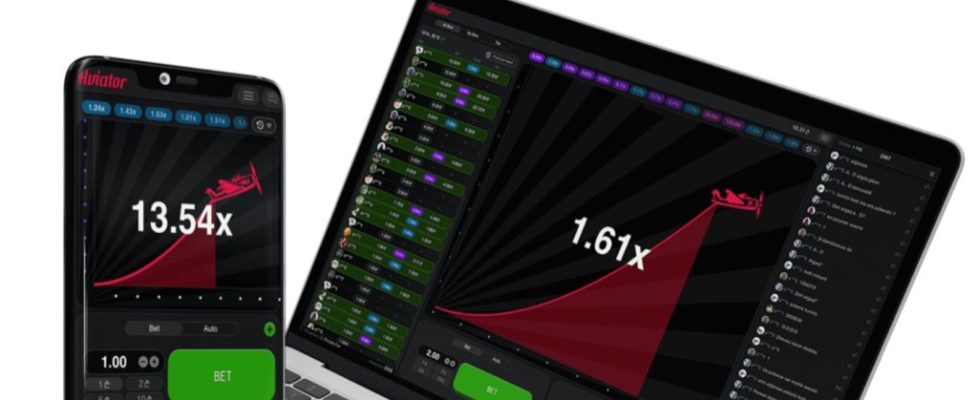
Aviator is a crash game by Spribe in which an increasing curve ends when the plane crashes. The round multiplier rises from 1.00x, and a cash-out succeeds only when the request reaches the server before the crash.
Small-bankroll play depends less on finding a prediction than on controlling the amount exposed in each round. This guide explains the 2% rule, shows how a $0.10 starting stake works, and sets out session budgets, cash-out choices and stop limits.
Aviator Round Mechanics
Aviator offers two bet panels in each round, and each panel can use a separate cash-out target. The game publishes a SHA-256 server-seed hash before the round, while the crash point is fixed before take-off.
Players can combine client seeds with the server seed and check the inputs through the in-game verification tool after the round. The operator or Spribe cannot change the result after the round starts, but the cash-out request still has to arrive before the crash.
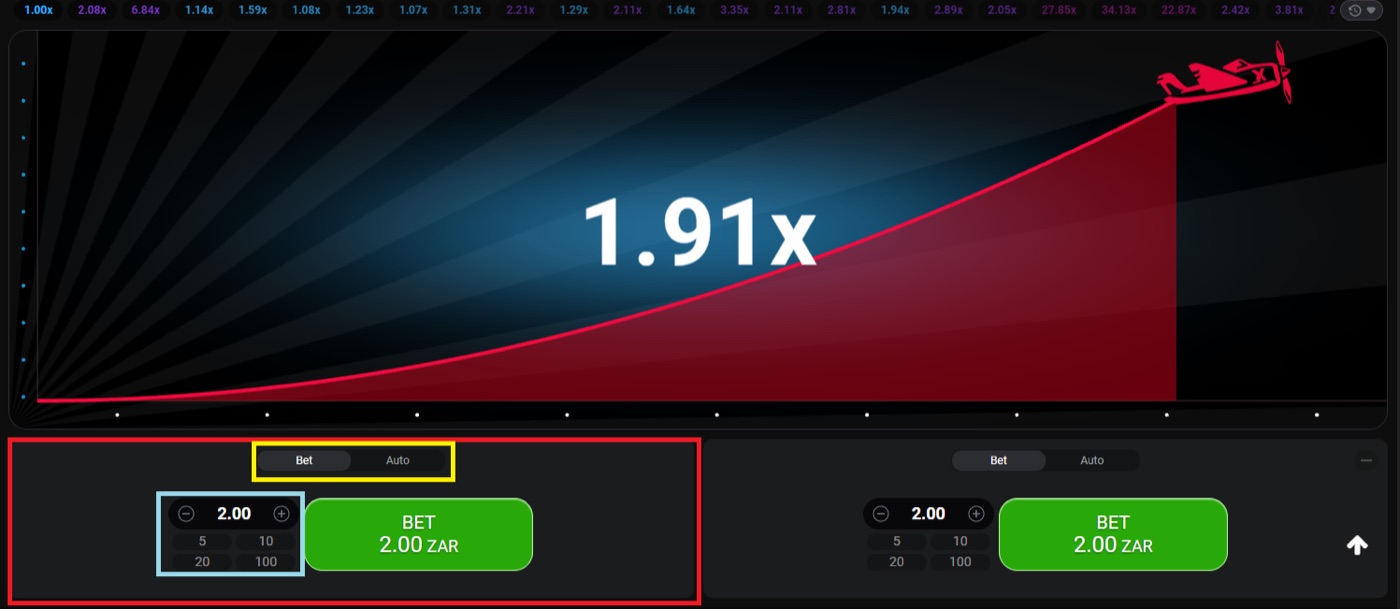
The Aviator desktop screen shows a round at 1.91x and two separate bet panels.
Aviator rounds last about 8-30 seconds, with 60-90 rounds possible in an hour and only a few seconds between rounds. That pace matters for stake sizing because a small amount can be exposed many times if you keep entering new rounds.
- The 1.2x multiplier is reached in about 80.8% of rounds.
- The 1.5x multiplier is reached in about 64.7% of rounds.
- The 2x multiplier is reached in about 48.5% of rounds.
- The 5x multiplier is reached in about 19.4% of rounds.
- The 10x multiplier is reached in about 9.7% of rounds.
About 3% of rounds, or roughly 1 in 33, crash instantly at 1.00x. A target that wins more often can still lose money because the expected value is -3% of the stake at every cash-out target.
| Cash-out target | Rounds reaching target | Meaning for a small bankroll |
|---|---|---|
| 1.2x | 80.8% | Lower target, but a smaller return |
| 1.5x | 64.7% | Common short target in strategy guides |
| 2x | 48.5% | More exposure before cash-out |
| 5x | 19.4% | Higher variance and fewer winning rounds |
| 10x | 9.7% | Rare target with substantial losing risk |
These percentages describe the chance of reaching a multiplier, not a guarantee for a session. Rounds are independent, so previous multipliers do not create a reliable pattern for the next result.
Applying The 2% Rule
The 2% rule sets one round’s stake at no more than 2% of the available bankroll. A $5 bankroll therefore produces a $0.10 maximum stake, while a $10 bankroll produces a $0.20 maximum stake.
The rule limits the size of one decision; it does not remove the 3% house edge or turn Aviator into a positive-expectation game. A losing round reduces the bankroll, so the next 2% amount should be recalculated from the lower balance if you follow the rule strictly.
- Record the money available for the session.
- Multiply that amount by 0.02.
- Round down to the smallest available stake.
- Use that amount as the maximum total stake for one round.
- Recalculate after a substantial bankroll change or start a new session.
Typical Aviator stakes range from about $0.10 to $100 per bet, depending on the operator. The $0.10 figure is useful for a small bankroll because it matches the 2% rule for a $5 balance, but the available minimum and maximum depend on the operator.
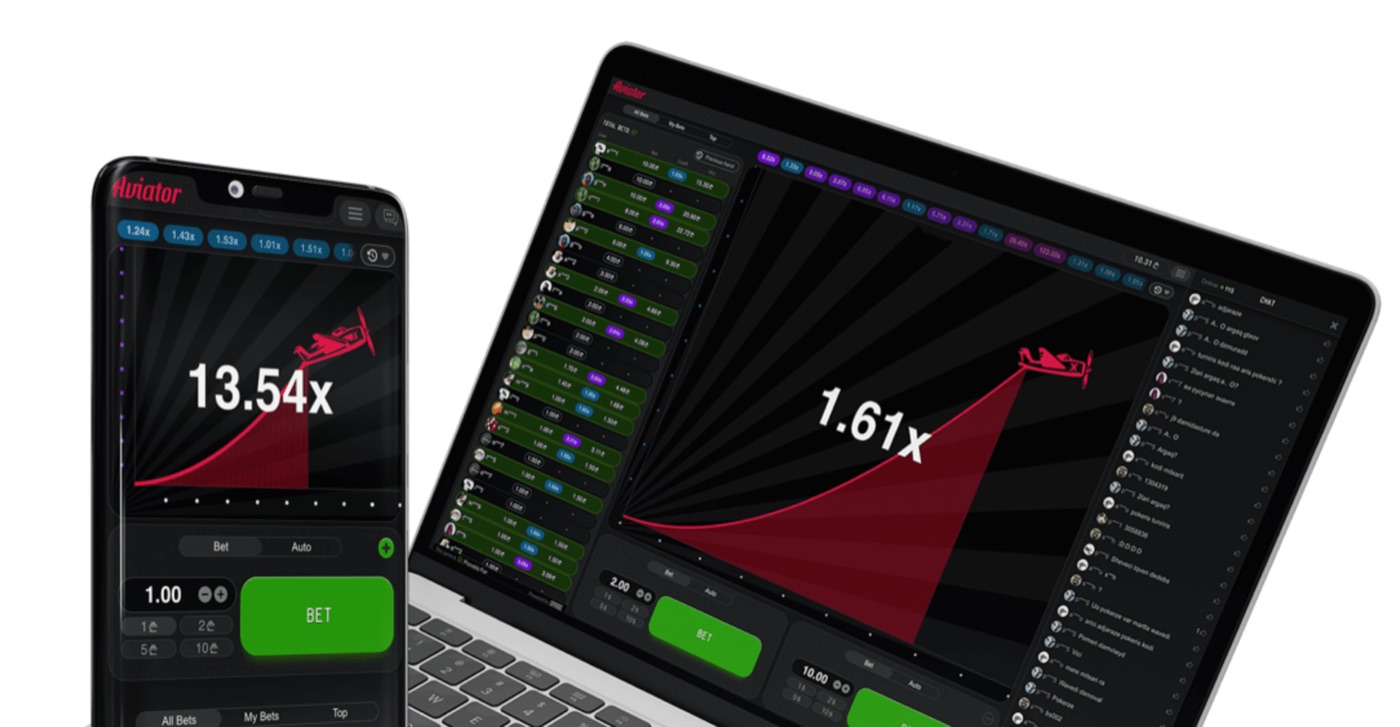
Aviator appears on a phone and laptop with displayed multipliers of 13.54x and 1.61x.
Consider a $5 session bankroll. A player who follows the rule can stake $0.10 in one round, because $0.10 is 2% of $5. If the player loses, the balance becomes $4.90, and 2% of that balance is $0.098, so the next stake should be rounded down to the available minimum rather than increased.
If the operator only offers a minimum above the calculated 2% amount, the player has two practical choices: use a larger percentage knowingly or do not place the bet. A minimum stake does not justify raising the session bankroll or chasing a loss.
- A $5 bankroll gives a $0.10 two-percent stake.
- A $10 bankroll gives a $0.20 two-percent stake.
- A $25 bankroll gives a $0.50 two-percent stake.
- A $50 bankroll gives a $1 stake.
- A $100 bankroll gives a $2 stake.
A two-bet round needs extra care. If the combined exposure must stay within 2%, divide the permitted amount between both panels; do not treat two $0.10 bets as one $0.10 position.
Building A Session Budget
A session budget is the fixed amount available for one Aviator playing period. The 2% rule then limits the amount placed in each round, so the budget and stake answer different questions.
A $5 budget with a $0.10 stake has 50 stake units before any win or loss is counted. A $10 budget with a $0.20 stake also has 50 stake units, but the cash amount at risk per round is twice as large.
Set the budget before opening the game and keep it separate from money needed for other purposes. Do not add funds during the session to recover a loss, because that changes the original risk limit after the result is known.
- Choose the session budget in cash terms.
- Calculate 2% of that budget.
- Choose a target multiplier before placing the bet.
- Set a maximum loss below or equal to the session budget.
- Set a win limit before the first round.
- Stop when either limit is reached.
For example, a player can set aside $5, select a $0.10 maximum stake, and stop when the balance falls to $4. The player can also choose a win limit of $1, meaning the session ends when the balance reaches $6. The exact loss and win limits are personal controls, not game rules.
The number of rounds matters because Aviator can run at 60-90 rounds per hour. A $0.10 stake repeated for 30 rounds creates $3 in total placed stakes, even though the amount exposed at any single moment is only $0.10.
This is not the same as losing $3 automatically. The player may cash out, lose, or win different amounts across those rounds. It does show why a small stake can become meaningful when the game’s short rounds encourage frequent entries.
A session budget should include only money the player can afford to lose. Stop playing if the planned loss limit is reached, and do not use a larger stake to compensate for an earlier result.
Some operators provide demo mode without registration, including an operator demo or demo.spribe.io. Demo play can help a player understand the two panels and cash-out controls without using the session budget.
Choosing Cash-Out Targets
Aviator has a 97% RTP and a 3% house edge across the game’s cash-out targets. The expected value remains -3% of the stake at 1.5x, 2x and every other target.
A 1.5x cash-out returns the stake plus half the stake when it succeeds, while a 2x cash-out returns twice the stake including the original stake. Neither target changes the underlying edge, and both remain exposed to an instant 1.00x crash.
Strategy guides commonly discuss auto cash-out at 1.5x-2x. They also describe splitting two bets, with one cashing out at 1.5x-2x and the other left toward 5x-10x, but the second position produces higher variance and does not improve the mathematical edge.
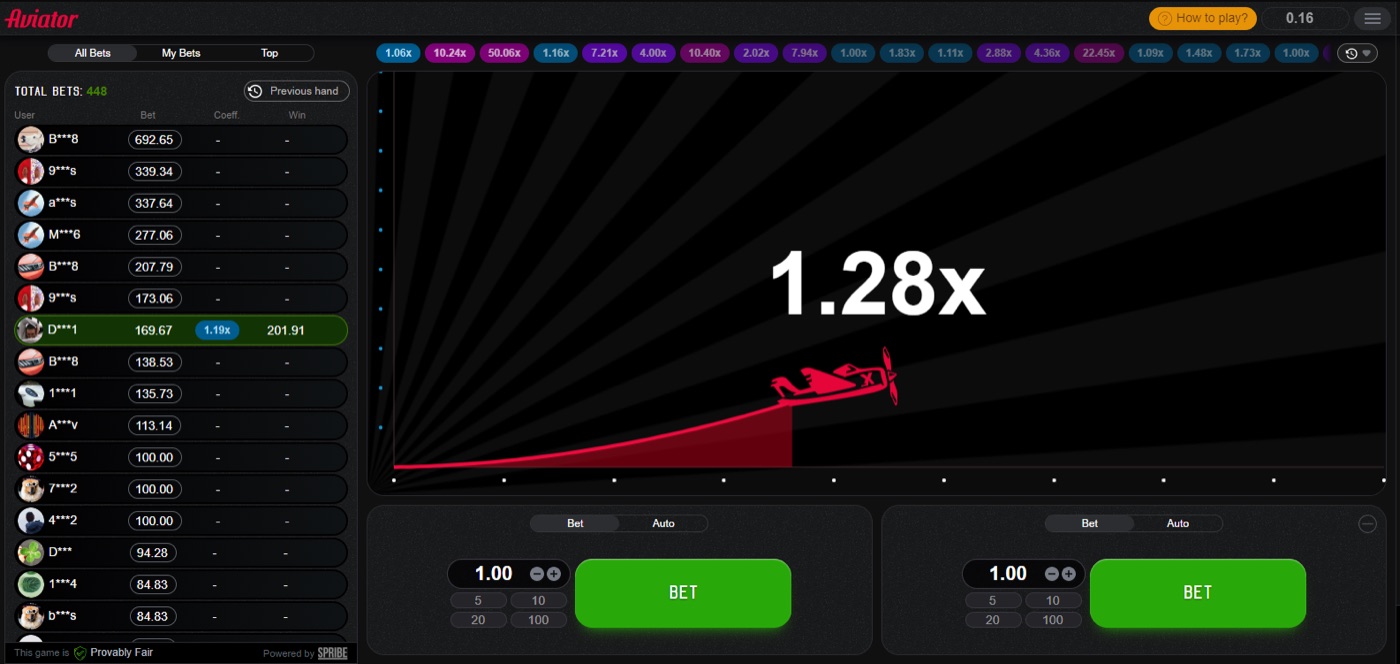
The Aviator game screen shows the plane in flight while the multiplier increases.
Suppose a player places $0.10 and chooses 1.5x. A successful cash-out produces $0.15 in total return, which includes the $0.10 stake and a $0.05 profit. A 1.00x crash loses the $0.10 stake.
At 2x, a successful $0.10 bet produces a $0.20 total return and a $0.10 profit. The 2x target is reached in about 48.5% of rounds, compared with about 64.7% for 1.5x, so the higher target exposes the stake to more losing rounds.
A player may use the following comparison when choosing a target:
- Use 1.5x when the priority is a shorter target with a 64.7% historical probability in the supplied figures.
- Use 2x when accepting that the target appears in about 48.5% of rounds.
- Treat 5x and 10x as high-variance targets, reached in about 19.4% and 9.7% of rounds.
- Do not raise the stake because a high target has not appeared recently.
When discussing an Aviator multiplier, cash-out or stake with an aviator casino, check the operator’s displayed rules and controls before playing. The operator sets some conditions, including win caps per round, and Spribe does not publish a maximum multiplier.
Limits And Automation
Aviator includes Auto Cash-Out, which places a cash-out at a preset multiplier. Aviator also includes Auto Bet or Auto Play for 10-100 rounds, with stop-on-win and stop-on-loss settings.
Automation follows the chosen instructions, but it does not predict the crash point or change the 3% house edge. A player can therefore use an automatic setting for discipline while still needing a fixed stake, session budget and stop limit.
Set the automatic controls only after deciding how much one round may use. Review the following items before activating a sequence:
- Stake amount for each bet panel.
- Cash-out multiplier for each panel.
- Number of automatic rounds, from 10-100.
- Stop-on-loss amount.
- Stop-on-win amount.
Auto Play can create more entries than manual play because a new round begins a few seconds after the previous one. That makes the session budget especially important. A player who allows 100 automatic rounds should know the maximum planned exposure before starting.
Martingale is not a suitable response to a small bankroll. It doubles the stake after each loss and reaches 1,024 times the base stake after 10 losses, while Fibonacci and D’Alembert systems also do not beat the 3% edge.
For a $0.10 base stake, a 10-loss Martingale sequence would require a $102.40 stake on the next step. That amount is incompatible with a $5 bankroll and shows how quickly loss-recovery systems can exceed a controlled staking plan.
Graphs, previous round history and claims about the best time to play do not alter independent round probabilities. Playing off-peak may provide a smoother connection, but it does not improve the odds.
Aviator FAQ
Aviator has a 97% RTP and a 3% house edge. The game uses a provably fair process that fixes the crash point before take-off.
Small-bankroll players can use the questions below to check the practical limits of a staking plan. The answers apply to Aviator’s stake, cash-out and session controls rather than to prediction tools.
What is the 2% Aviator rule?
The 2% rule means that one round’s total stake should be no more than 2% of the current bankroll. With a $5 bankroll, the maximum is $0.10; with a $10 bankroll, it is $0.20.
Can I play Aviator from $0.10?
Typical stakes start at about $0.10, but the minimum depends on the operator. A $0.10 stake follows the 2% rule for a $5 bankroll, provided the player is using one bet panel or keeps the combined two-panel stake within the limit.
Can an Aviator app predict the crash?
No prediction app can determine the next crash point. The crash point is committed by a server-seed hash before the round, and apps or Telegram signal bots cannot change the independent result.
Why did my Aviator cash-out time out?
A cash-out request must reach the server before the crash. A time-out can result from latency or a slow device, so the request is not guaranteed to succeed merely because the player pressed the cash-out control.
Can I play Aviator for free?
Demo mode exists through an operator demo or demo.spribe.io and needs no registration. It can show the game controls without using real money, but it does not change the probabilities used in paid rounds.
What should I do after reaching my limit?
Stop when the planned loss or win limit is reached. Do not increase the stake, add funds to recover a loss, or use Martingale to continue the session.